
C HEADER FILES
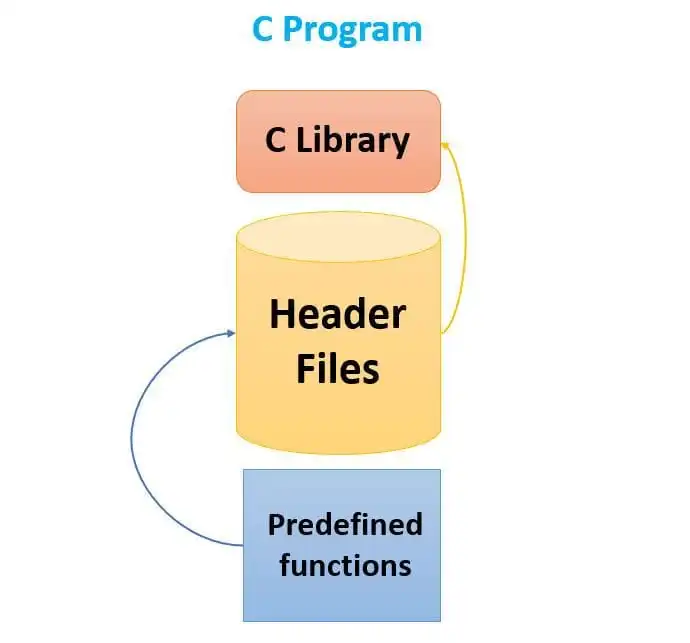
C Header Files: What Are They? C HeaderFiles store declarations of variables, functions, and macros that we want to use in our program. Think of a header file as a menu card 📄.The food is cooked somewhere else, but the menu tells you what items are available. In the same way: C HeaderFiles inform the compiler about the functions that can be used. The actual code (definitions) of those functions is written somewhere else. For example: #include <stdio.h> This line tells the compiler: “Hey compiler, I want to use functions like scanf() and printf(). . Why Do We Use Header Files in C? CHeaderFilesProgramming is made simple, tidy, and structured with the help of header files. Here’s why they matter: It is not necessary to repeatedly write the same code. It becomes simple to read your program. Big programs can be broken up into smaller components. Code is reusable in a variety of programs. Programming would become disorganised and confusing without header files. . How Do C Header Files Work? The CHeaderFiles keyword is used in header files. Including a header file can be done in two ways: 1. Standard Header File #include <stdio.h> For built-in header files System folders are searched for the file. 2. User-Defined Header File #include “myfile.h” utilised for header files of your own Your project folder is searched for the file. The compiler copies the header file’s contents into your program before compilation when it runs. Types of CHeader Files In CHeaderfiles come in two primary varieties. 1. Typical Header Files C has already supplied these. For instance: stdio.h stdlib.h string.h math.h You don’t have to make them. You simply incorporate and make use of them. 2. Header Files Defined by the User The programmer makes these. For instance: #include “mathfunctions.h” When do you make them? Your project is quite big. You wish to repurpose your own functions. Frequently Used C Header Files and Their ApplicationsHeader File Uses stdlib.h Memory allocation, exit, random numbers, input and output (printf, scanf), string.h String operations, math.h Mathematical functionsTime.h Date and time functions; ctype.h Character testing How to Make and Utilise Your Own Header File . Step 1: Create a header file myheader.h int add(int a, int b); Step 2: Create a C file #include <stdio.h> #include “myheader.h” int add(int a, int b) { return a + b; } int main() { printf(“%d”, add(2, 3)); return 0; } This helps keep your code clean and easy to manage What Are Include Guards and Why Are They Important? Sometimes a header file gets included more than once, which causes errors. To stop this, we use include guards. Example: #ifndef MYHEADER_H #define MYHEADER_H int add(int a, int b); #endif This tells the compiler: “Include this file only once.” What Exactly Is Inside a Header File A header file usually contains: Function declarations int sum(int a, int b); Macro definitions #define PI 3.14 Constants const int MAX = 100; Why Header Files Improve Teamwork In big companies: One person writes header file Others use it They don’t need to know: How code works Just how to use it This saves time, effort, and confusion. Header files (.h) in C/C++ contain declarations (prototypes, constants, types) for functions and variables, acting as an interface for code in other source files, linked by the #include preprocessor directive to make shared functionality available, separating declarations from implementation for modular, maintainable programs What They Contain Function Prototypes: Declarations (e.g., int add(int a, int b);) without the function’s body. Macros: Predefined constants and macros (e.g., #define PI 3.14). Type Definitions: Structs, enums, and other custom data types